
Only one of the three drivers of the economy has performed in the way it should: government spending grew at 15.6 per cent, reports Abhishek Waghmare.
A look at six indicators shows all of them have collapsed from positive growth in April to contraction in September.

It shows that states would require a compensation to the tune of at least Rs 1.67 trillion in 2024-25, as none of them would be able to achieve a 14 per cent growth every year.

While experts pointed out the impact of corporation tax cuts cannot yet figure in collections as most companies are yet to decide on their choice, government officials said a part reason for slow collection is the tax cut.
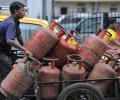
Only 48.3 per cent of the rural households used LPG, while the figures were much higher in urban areas at 86.6 per cent, according to a NSO report.
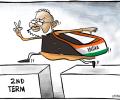
The government's decision to release the reports comes two days after over 200 scholars from across the globe issued a statement demanding release of all withheld reports produced by the NSO, including the household consumer expenditure survey that was junked.

Experts said a dip in consumption expenditure indicated an increasing prevalence of poverty in the country.

Sitharaman said the Bill has proposed giving a legal framework for fixed-term employment through which contract workers serving a fixed-tenure will get equal statutory social security benefits as regular workers in the same unit.
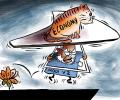
What could be the reason for the successive downward revisions across the board? Some key indicators make it evident, reports Abhishek Waghmare.

The findings of the report showed consumer spending falling for the first time in over four decades in 2017-18. The government has, however, termed it a "draft" report, reports Somesh Jha.

In the draft rules, among 681 listed professions, armed security guards, supervisors, surveyors, and carpenters (class I) are proposed to be treated as highly skilled professionals; electricians, tailors and drivers are skilled; cooks and cobblers as semi-skilled and dairy coolies, office peons and sweepers as unskilled.

By November 3, only 17,000 applications with tax payable amounting to Rs 1,100 crore have been received by the government, under the Sabka Vishwas Legacy Dispute Resolution Scheme. The scheme gives a deep discount of 70 per cent for cases pending appeal where tax demand is more than Rs 50 lakh, and 50 per cent waiver beyond that amount.
After taking benefit of the scheme, jobs increased by around 11 mn in establishments that took loans.

Unemployment was worse only in the pre-demonetisation period, according to the data, at 9.6 per cent in August 2016.

Vidarbha had given as many as 44 seats to the BJP in 2014. The Congress and NCP, plus independents and smaller parties, snatched 19 seats from the BJP, reports Abhishek Waghmare.

Part of the dues has been pending since 1995-96 - the inception year of the Employees' Pension Scheme administered by the EPFO. The Centre also owes the EPFO more than Rs 1,000 crore towards the minimum pension scheme it had notified in September 2014.
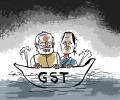
If the items and services such selected subsequently pass the test from the fitment committee and the GST Council, this would be the first of such rate hikes, after a series of cuts in the process of rate rationalisation that started in November 2017.

The government would be ironing out issues related to the controversial 'bail-in' clause in the earlier Bill, explore hiking the deposit insurance cover of customers, and decide whether the resolution framework should apply to public sector banks.

According to the global report, just 9.6 per cent of all children between 6 and 23 months of age are fed a minimum acceptable diet.

PSBs have been requested to reach out to MSMEs to provide bill discounting to them against their dues since they suffer the most from shortage of cash.
 © 2026 Rediff.com - Investor Information - Advertise with us - Disclaimer - Privacy Policy - Sitemap - Feedback - About us - Terms of use - Grievances